If Amherst has ever felt a little hard to pin down, you are not imagining it. One road can lead you past historic village homes, another toward wooded acreage set far back from the street, and another into newer subdivision pockets with more modern layouts. If you are trying to figure out where you might fit in the Amherst market, this guide will help you understand the town’s main neighborhood settings, the home styles you are most likely to see, and how those differences can shape price, privacy, and day-to-day living. Let’s dive in.
Amherst at a glance
Amherst is defined in a big way by low-density residential zoning. According to the town master plan, about 90% of Amherst is zoned for low-density residential use, with the Residential/Rural district covering about 66% of the town, the Northern Rural district about 24%, and the New Town zone about 5%.
That planning framework helps explain why Amherst feels spacious compared with many nearby communities. In the Residential/Rural district, one-family homes are allowed on lots of at least 2 acres with 200 feet of frontage. In the Northern Rural district, one-family homes require 5 acres and 300 feet of frontage, reflecting the town’s goal of preserving rural character.
This is also why it helps to think about Amherst by setting instead of by one average number. Recent market snapshots show a townwide median sale price around $505,489 and a median list price around $650,000, but those numbers do not fully capture the difference between a village-area historic home, a newer house in a subdivision, and a rural property with significant acreage.
Village homes in Amherst
For many buyers, Amherst Village is the part of town that first comes to mind. The village area is centered on the historic core and the Big Common, and it offers the most recognizable New England character in town.
The Amherst Village Historic District is a local historic district overlay. That means certain exterior changes require a Certificate of Approval from the Historic District Commission. If you love older architecture and a classic village setting, that oversight may feel like a benefit. If you prefer fewer design restrictions, it is something to understand early in your search.
Common village-area styles
The village core includes many late eighteenth- and nineteenth-century homes. The historic survey identifies familiar New England forms and details such as:
- Federal
- Georgian/Federal transitional
- Greek Revival
- Italianate
- Colonial Revival
- Cape Cod
- Ranch
- Other mid-twentieth-century forms
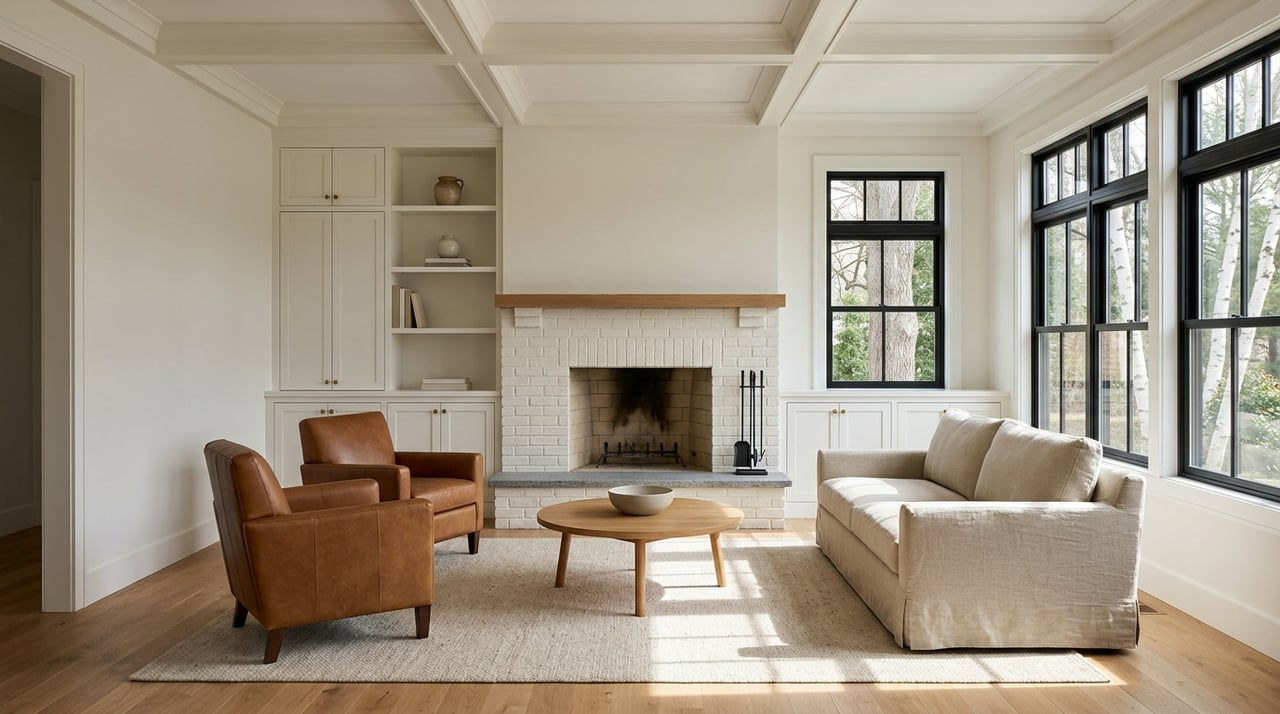
In practical terms, that means village buyers may see everything from period homes with traditional proportions to later homes that blend into the broader village fabric. You are not shopping one exact architectural type.
Village living is not one-size-fits-all
A common misconception is that village-area homes always sit on very small lots or come only in antique form. Amherst’s historic survey paints a broader picture. The village area also includes later infill and homes on wooded lots or in small-scale subdivisions near the historic core.
That mix gives you more variety than you might expect. You may find an older home close to the center, a newer house designed to fit the setting, or a village-adjacent property with more land and privacy while still being close to town.
Village-area pricing patterns
Prices in and around the village can vary widely depending on acreage, updates, and location. Recent examples near the village include a home at 166 Amherst Street listed at $1.2 million on 4.3 acres and another at 6 Old Jail House Road with an estimated value of $927,000 on 1.4 acres abutting conservation, the historic district, and the village.
The takeaway is simple: Amherst Village charm can come at a premium, especially when a home combines period appeal, usable land, updated interiors, and close proximity to the town center. Buyers should be ready to compare not just the house, but also the lot, condition, and historic-district context.
Rural Amherst properties
If your picture of Amherst includes long driveways, wooded surroundings, fieldstone walls, and a little more breathing room, the rural parts of town may be what you are really looking for. Amherst’s outer areas reflect the town’s low-density planning and its emphasis on scenic, natural character.
The Northern Rural Zone is the clearest example of that approach. The zoning ordinance describes it as an area that has remained essentially undeveloped and unchanged, where lower-density development is desirable because of rural, scenic, and natural character as well as physical limitations.
Where the rural feel is strongest
The town master plan places much of the Northern Rural Zone west of Horace Greeley Road and primarily north of Austin Road. In these areas, the setting often becomes a defining feature of the property.
The historic survey describes outer Amherst as a landscape of former fields turning into wooded lots, fieldstone walls, and homes placed in clearings or set well back from the road. If privacy matters to you as much as square footage, this part of Amherst deserves a closer look.
Common rural home styles
Rural Amherst is not limited to old farmhouses. The mix is broader than many buyers expect, and examples in the survey include:
- Farmhouse-derived homes and early New England forms
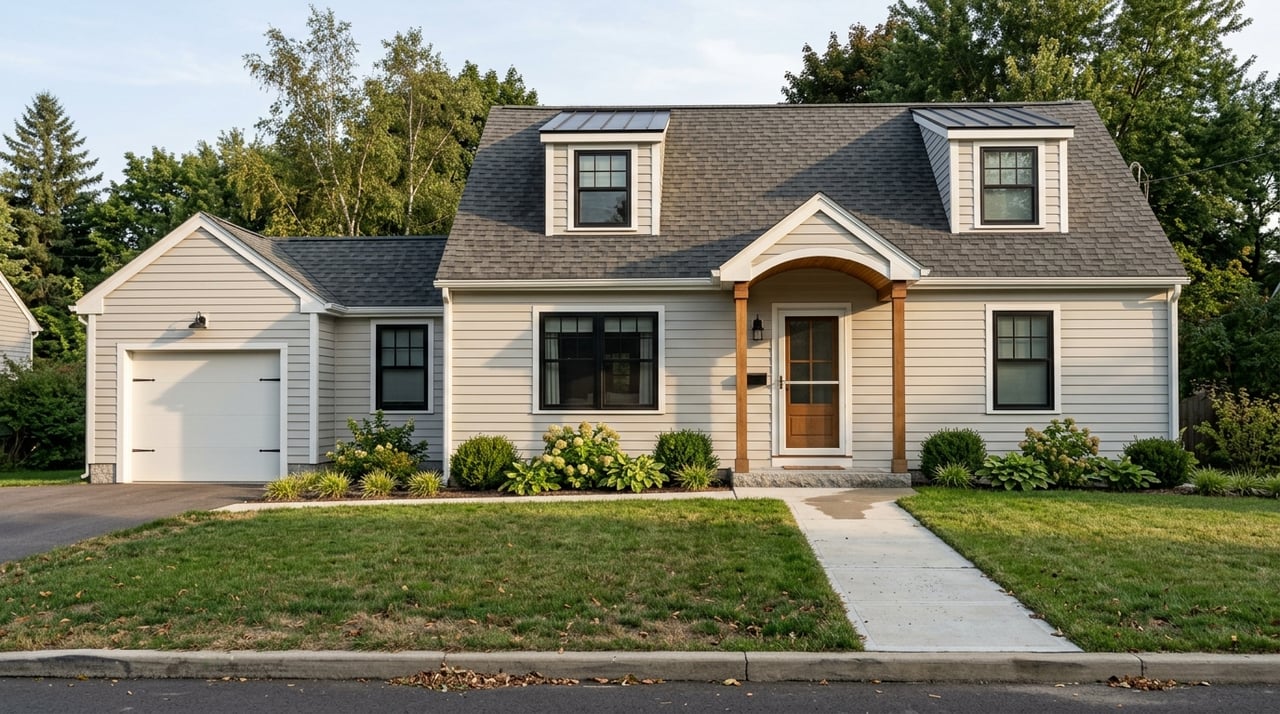
- Cape Cod homes
- Garrison Colonials
- Split-entry homes
- Ranch homes
- Contemporary homes
This variety matters because two properties with a similar Amherst address can feel very different in age, layout, and upkeep. In rural Amherst, the land often shapes the experience as much as the architecture does.
Rural pricing depends on more than the house
This is probably the widest-ranging segment of the Amherst market. Recent examples include a sale at 4 Mack Hill Road for $712,500 on 2.84 acres, a listing at 481 Boston Post Road for $699,999 on 7.29 acres, and a listing at 4 Washington Drive for $1.28 million on 7.89 acres.
Land listings also show how much value can be tied to acreage alone, with examples ranging from $650,000 for 9.49 acres to $2.575 million for 121 acres. The practical takeaway is that in rural Amherst, price often reflects privacy, setting, lot size, and long-term land appeal just as much as interior finishes.
Newer subdivisions and infill
Not every Amherst buyer wants an antique home or a deeply rural property. If you prefer a more current floor plan, newer finishes, or a neighborhood setting with more predictable layouts, Amherst also has a modern side.
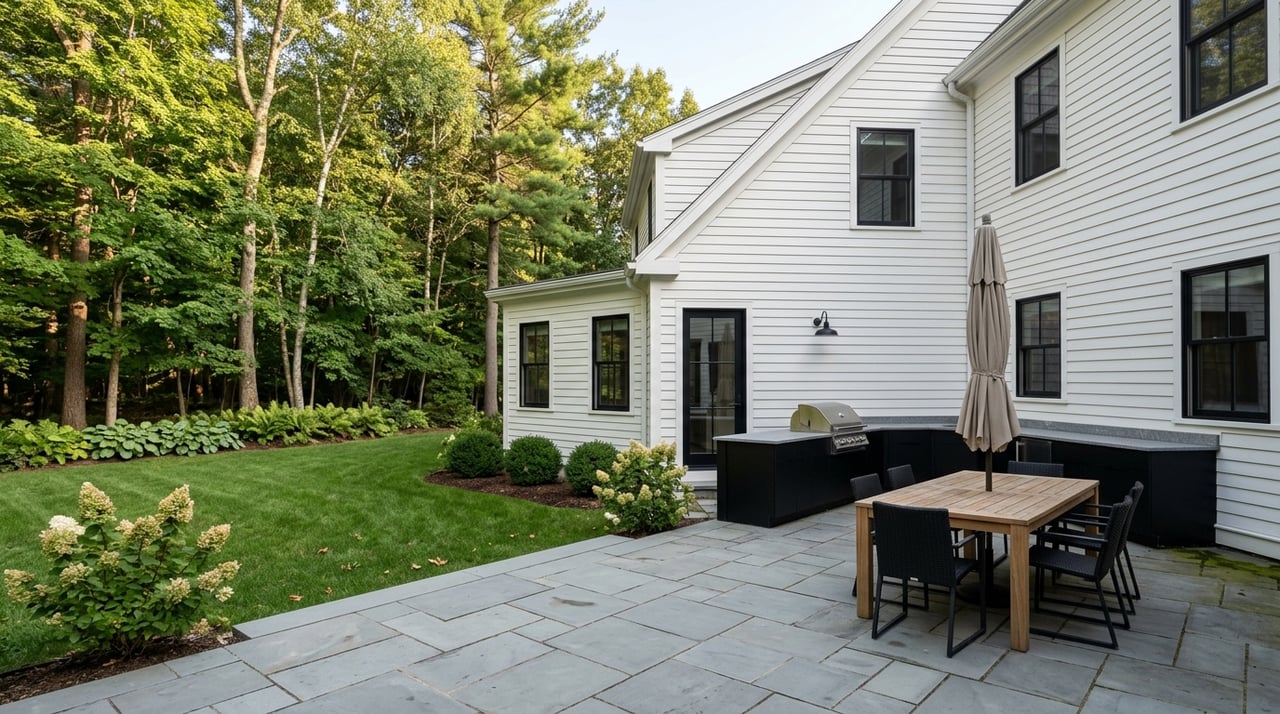
The town’s more recent residential growth is largely made up of late twentieth- and early twenty-first-century infill and small-scale subdivision development extending outward from the village core. These homes are often built in wooded clearings, cul-de-sacs, and smaller neighborhood pockets.
Styles in newer Amherst pockets
The survey shows a broad mix of styles in these newer settings, including:
- Cape Cod
- Garrison Colonial
- Split-entry
- Ranch
- Center Entry Colonial
- New Traditional forms
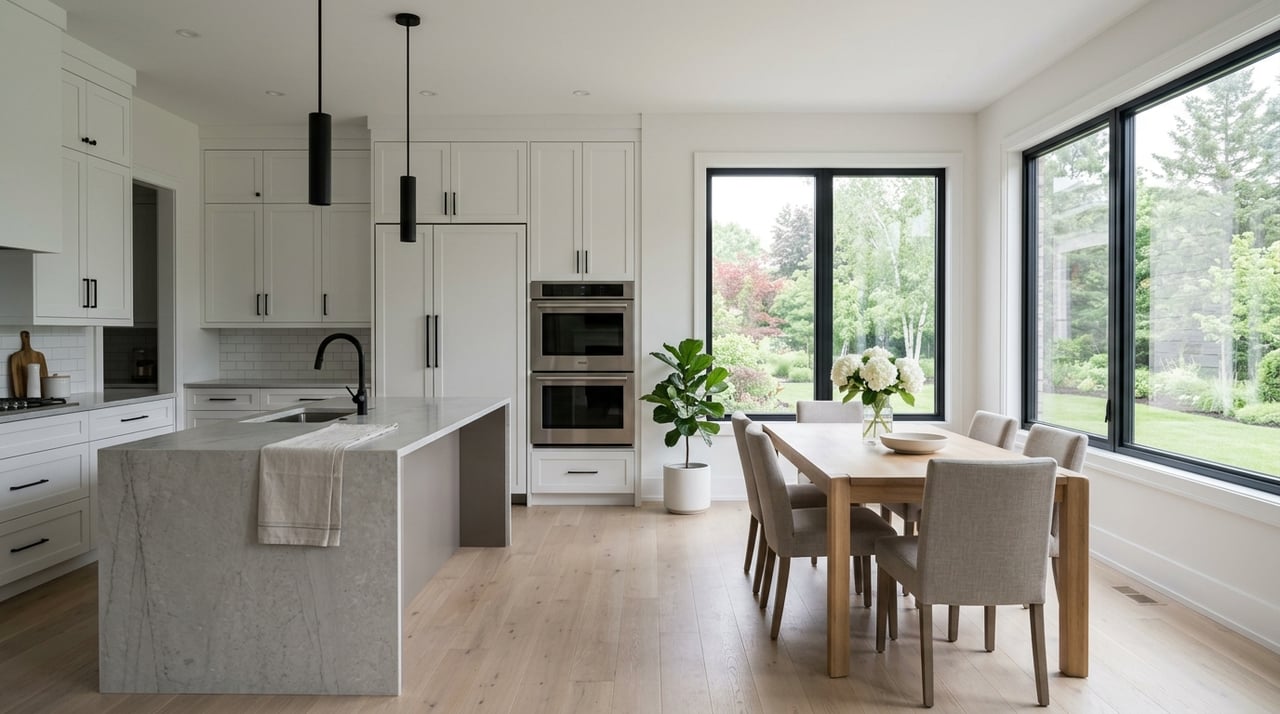
For many buyers, these homes can offer a more familiar layout than some older houses. You may find more open living areas, attached garages, and room configurations that fit current household needs more easily.
New construction and price range
Current new-construction data suggests this is one of the clearest parts of the Amherst market for buyers seeking newer inventory. Realtor.com shows a median new-construction list price of $679,900 in Amherst.
That said, the range is broad. One example is 1 McIntosh Way, listed at $1,385,900 for a 2026 Colonial on 2.29 acres in a new subdivision. At the same time, new-construction condo options have appeared in roughly the $535,000 to $599,000 range, showing that newer Amherst housing can span several price points and property types.
How to compare Amherst settings
If you are deciding between Amherst neighborhoods or home types, it helps to focus on how you want to live, not just what style you like on the outside. In Amherst, the setting often shapes your experience as much as the house itself.
Here is a simple way to think about the town’s three main patterns:
| Amherst setting | What stands out | Common home types | Price pattern |
|---|---|---|---|
| Village and village-adjacent | Historic character, central location, possible historic oversight | Federal, Greek Revival, Colonial Revival, Cape, Ranch, infill homes | Often high $900Ks to $1.2M+ for homes with location, land, and updates |
| Rural and northern areas | Privacy, acreage, scenic setting, homes set back from road | Farmhouse-derived, Cape, Garrison, Ranch, Split-entry, Contemporary | Wide spread from upper $600Ks to $1M+ depending on acreage and setting |
| Newer subdivisions and infill | More modern layouts, neighborhood pockets, newer finishes | Colonial, New Traditional, Ranch, Split-entry, Cape | Broad range from mid $500Ks condo options to $1M+ single-family homes |
What buyers should watch for
Amherst offers a lot of appeal, but each setting comes with different tradeoffs. Knowing those early can make your search smoother and less stressful.
If you are considering village homes, make sure you understand whether a property is within the Amherst Village Historic District overlay and what that may mean for exterior changes. If you are looking at rural properties, pay close attention to acreage, road frontage, siting, and how much of the value comes from the land itself.
If newer homes are your focus, compare subdivision inventory with village-adjacent infill and newer condos to see which balance of price, lot size, and layout fits you best. Amherst is not a market where one broad label tells the whole story.
Why Amherst feels so varied
The reason Amherst can feel so layered is that its zoning, history, and development pattern all pull together in visible ways. The town has protected a low-density residential identity while still allowing a mix of historic homes, later infill, and newer neighborhood pockets.
That is good news if you want options without leaving town. Whether you are drawn to classic New England architecture, a private wooded setting, or a more current home design, Amherst gives you multiple ways to find the right fit.
If you want help sorting through Amherst by neighborhood setting, price range, and home style, Connie Distasio offers candid, research-driven guidance to help you narrow the options and move forward with confidence.
FAQs
What types of homes are most common in Amherst, NH?
- Amherst includes a mix of historic village homes, rural properties on larger lots, and newer infill or subdivision homes. Common styles include Federal, Greek Revival, Colonial Revival, Cape Cod, Ranch, Garrison Colonial, split-entry, and newer Colonial or New Traditional homes.
What is the Amherst Village Historic District in Amherst, NH?
- The Amherst Village Historic District is a local historic district overlay centered on the historic village and Big Common. Certain exterior changes within the district require approval from the Historic District Commission.
Are most homes in Amherst, NH on large lots?
- Many are. Amherst is heavily shaped by low-density zoning, with large portions of town requiring 2-acre or even 5-acre minimum lots depending on the district.
Where are the most rural areas of Amherst, NH?
- The town’s most rural setting is associated with the Northern Rural Zone, located mostly west of Horace Greeley Road and primarily north of Austin Road according to the town master plan.
Are there newer homes in Amherst, NH?
- Yes. Amherst includes late twentieth- and early twenty-first-century infill and small-scale subdivision development, along with current new-construction options ranging from condos to larger single-family homes.
How much do homes cost in Amherst, NH?
- Recent market snapshots show a townwide median sale price around $505,489 and a median list price around $650,000. Actual pricing varies widely by setting, with rural acreage, village location, updates, and newer construction all affecting value.