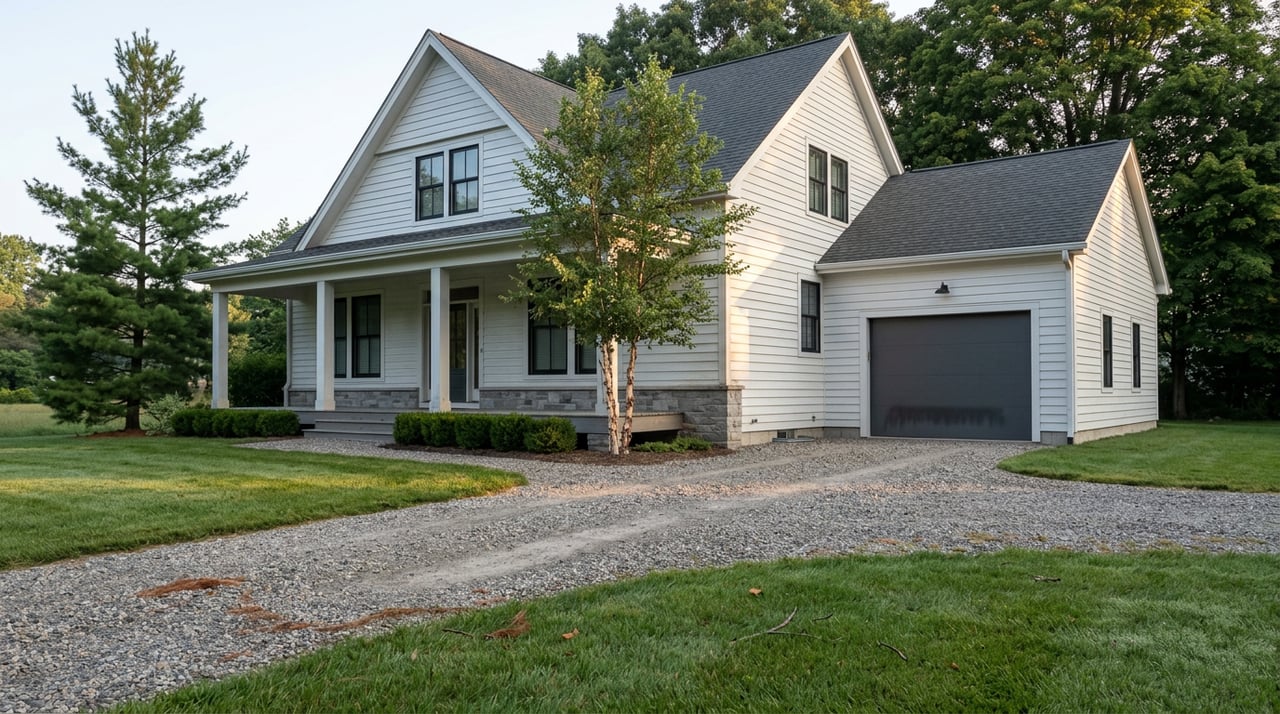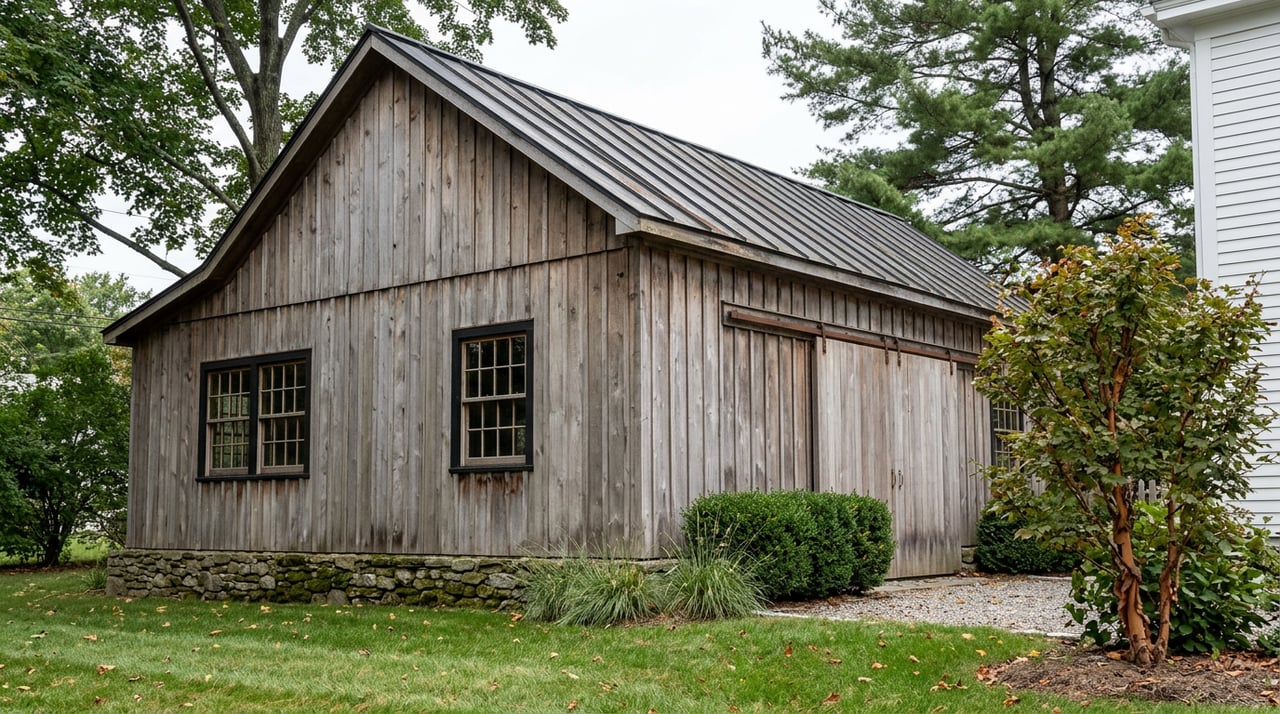
If you own a single-family home in Bedford with a detached garage, barn, or carriage house that has stood on the property since before July 1, 2025, you are sitting on something that did not clearly exist a year ago: a legal second home. New Hampshire's stacked accessory dwelling unit legislation, first in 2025 and again just days ago, turned that old outbuilding from a maybe-someday project into a by-right conversion. But almost no closed sale in Bedford yet reflects that shift in price. The right is real. The market hasn't priced it in.
That gap between what the law now allows and what the data has caught up to is the whole story here, and it matters whether you're getting ready to list a Bedford home this fall or you're touring one with an old barn out back.
What Actually Changed, And When
New Hampshire's House Bill 577 took effect July 1, 2025, rewriting RSA 674:71-72 so that anywhere a single-family home is allowed, the town must permit at least one accessory dwelling unit, attached or detached, as a matter of right. No special exception. No discretionary board approval. Bedford moved fast to comply, issuing its own ADU fact sheet on July 30, 2025, tying the new state rule to Zoning Article III, Sections 275-21.I and 275-21.J.
That handled new construction. It did not fully settle what happens with structures that already existed, especially ones sitting closer to a property line than today's setbacks would allow, which describes a lot of older barns and detached garages on Bedford's larger, longer-held lots. Towns could still send homeowners to the Zoning Board of Adjustment for a variance before letting them convert a nonconforming structure, even one that had been standing for decades.
House Bill 1079 closed that gap. Governor Ayotte signed it July 2, 2026, and it took effect August 31, 2026, just days before this was written. Under the new law, a structure that existed on or before July 1, 2025, can be converted into an ADU without a variance, even if it sits inside current setbacks or exceeds today's lot coverage rules. The building and health codes still apply. The hardship hearing does not.
Put together, those two laws mean a Bedford homeowner with a pre-2025 barn no longer needs to prove anything to a zoning board to turn it into an income unit. They need a building permit and a contractor.
The Local Rules, As They Stand
Bedford's fact sheet lays out the practical ceiling on what you can build:
| Requirement | Bedford's rule |
|---|---|
| Maximum size | 50% of the primary home's floor area, or 1,000 sq ft, whichever is less |
| Minimum size the town can require | No less than 750 sq ft |
| ADUs per parcel | One |
| Where allowed | General Residential (GR) and Residential & Agricultural (RA) districts |
| Short-term rentals | Not permitted, defined as under 30 consecutive days |
| Septic homes | Design and capacity must be approved by NH DES |
| Parking | One space, existing driveway, no new curb cut required |
Bedford's older zoning code shows exactly what's been overridden. Before HB 577, a detached accessory apartment in Bedford was only allowed in the Residential and Agricultural district, only through a discretionary conditional use permit from the Planning Board, and only on a lot of at least 1.5 acres. HB 577 strips out the acreage minimum and the discretionary approval step for a by-right ADU. If a Planning Department conversation still leans on the old 1.5-acre figure or a conditional use hearing, that's a script that hasn't caught up, not a current requirement.
Why The Appraisal Hasn't Caught Up
Here's the part that actually determines what any of this is worth at closing.
Appraisers lean on recent, closed, comparable sales. When a home has a permitted, code-compliant second living space with its own kitchen and bath, some appraisers will shift toward an income-based approach, similar to how a small multi-family property gets valued, weighing potential rental income alongside the standard sales-comparison method. That's a documented practice in the appraisal industry, not a Bedford invention.
National renovation-industry estimates put a permitted garage-to-ADU conversion at roughly 10 to 20 percent of home value in strong markets, sometimes more when the finish work is high quality and the rental math is clean. That's a useful benchmark for what the mechanism can do elsewhere.
Bedford doesn't have that data yet, at least not for its own market. HB 577 is fourteen months old. HB 1079, the piece that actually frees up existing barns and garages without a variance, is a few days old. That means Bedford's MLS has essentially no track record of homes selling at a documented premium because of a legal, permitted ADU, because the legal right to have one without a fight barely exists yet. An appraiser working a purchase in Bedford Village or off South River Road this fall has no local sale to point to that says "this is what a legal accessory unit adds here." They have a state law and a town fact sheet, not a spreadsheet of comps.
The value exists in the statute before it exists in the sales data. That's the entire window.
That's the mechanism worth understanding before you price a listing or write an offer. The right changed overnight. The comps will take a selling season or two to follow.
If You're Selling
Start by documenting when your outbuilding was actually built. Bedford's Assessing Department and the town's online property records can confirm construction dates tied to your parcel, and that date now carries legal weight it didn't carry two years ago. A pre-July-2025 barn is a variance-free conversion. A garage built last spring is not automatically covered the same way.
Decide early whether you're marketing unrealized potential or finished square footage. A permitted, inspected, code-compliant ADU is something a lender's appraiser can actually work with. An unfinished barn with "ADU potential" is a story you tell a buyer, not a number a bank will lend against. If you have the time before listing, finishing the conversion and pulling the permit is the version of this that shows up in the appraisal. If you don't, be precise in your listing language about what exists today versus what the law now allows, so a buyer's expectations and their lender's numbers don't collide during underwriting.
If You're Buying
Make the July 1, 2025 date part of your walkthrough questions on any older Bedford property with a detached garage, barn, or carriage house. That single date now determines whether converting that structure requires a building permit alone or a building permit plus a zoning variance. It's a five-second question with real consequences for your renovation timeline and budget.
Beyond the date, three practical items worth checking before you write an offer:
- If the home is on septic, confirm the design and capacity are approved by NH DES for both units before you count on the ADU as a future rental. This isn't optional paperwork, it's a code requirement.
- Ask the Building Department what impact fee applies and confirm it's due before occupancy, not before you start work, so it doesn't surprise your closing or construction budget.
- Don't plan around short-term rental income. Bedford's 30-day minimum rules out an Airbnb model for the unit, so any income projection should be built around long-term tenancy.
None of this shows up in a comp sheet yet. It shows up in the questions you ask before you're under contract.
A Few Direct Questions
Does the variance-free conversion apply if my garage was built after July 2025? No. HB 1079's protection for nonconforming structures applies specifically to buildings that existed on or before July 1, 2025. Anything built after that date follows the standard by-right ADU rules under HB 577, not the nonconforming-structure exception.
Can I build more than one ADU on a Bedford lot? No. Bedford's fact sheet limits each single-family parcel to one accessory dwelling unit, regardless of lot size.
Does the old 1.5-acre minimum still apply to detached ADUs in Bedford? Not as a separate requirement. That threshold predates HB 577 and can't be enforced beyond what your underlying zoning district already requires for the primary home.
Will an appraiser automatically credit my Bedford home for a legal ADU? Not automatically. The unit needs to be permitted and code-compliant, and even then, the appraiser is working with a very thin set of local comparable sales right now, simply because the law allowing this is still new. That's improving, but it isn't there yet.
If you're weighing what an older Bedford property, or the barn behind it, is actually worth under these new rules, that's exactly the kind of question worth a real conversation before you list or make an offer. Connie DiStasio has spent her career doing the homework so clients don't have to guess. Let's Connect.